
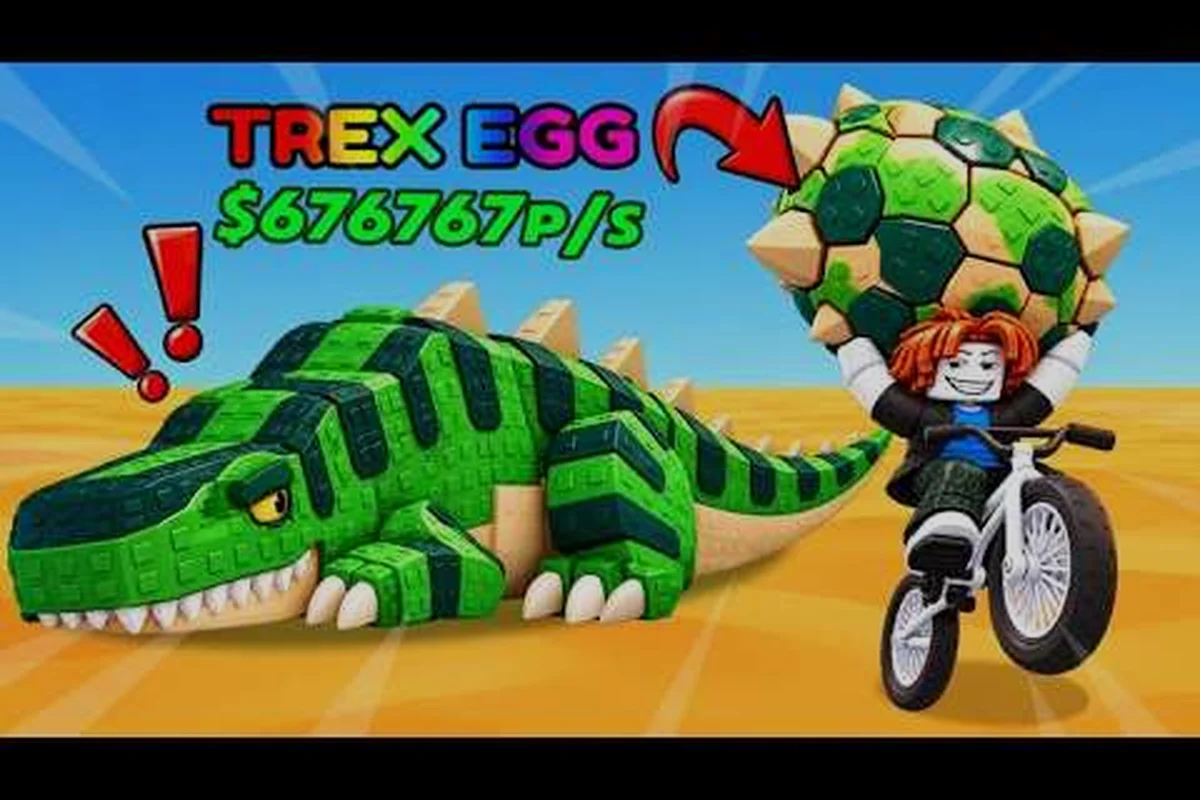
Bike For Egg event eggs are the fastest way to jump from a starter garage to a collection that actually earns, and the Halloween hunt is where most players first notice the difference. Limited seasonal crates, mystery question-mark eggs and oversized giant eggs all feed the same size-and-mutation economy, so knowing which one to chase changes what you hatch and what you sell.
Understanding that economy early matters because a single giant egg can outperform a dozen ordinary hatches. This breakdown covers where event eggs come from, how mystery eggs behave, what the size tiers are worth, and how mutation rates quietly decide whether a bigger egg is a jackpot or a trap.
The exact egg types and collection mechanics for the Bike For Egg event are demonstrated in this Bike For Egg event gameplay walkthrough, which shows how players gather eggs while riding.
Where Bike For Egg Event Eggs Come From
Event eggs are not part of the permanent shop rotation. They appear during seasonal windows, and the Halloween event is the clearest example of how the system works. According to community footage of the 2026 seasonal run, the event loop combines limited egg crates, mystery question-mark crates and holiday-themed pets, all farmed through the same ride-and-hatch cycle you already use in the base game.
The practical takeaway is that event eggs reward time inside the event window, not raw currency. You cannot buy your way to a limited egg the way you can with standard shop eggs, because the event crate is gated behind event participation. Players who log in during the first days of a seasonal patch usually report better access to the limited pool before the economy floods.
Here is how the main egg sources compare in terms of effort and payoff:
| Egg Source | How You Get It | Availability | Typical Payoff |
|---|---|---|---|
| Standard shop eggs | Coins at the egg vendor | Always | Low to mid tier pets |
| Event eggs | Seasonal event tasks and crates | Limited window | Exclusive holiday pets |
| Mystery eggs | Question-mark crates | Rotating | Random, high variance |
| Giant eggs | Rare hatch or event reward | Rare | High value, size-mutated |
| Mutation eggs | Any hatch with a size roll | Always, low odds | Multiplier on base value |
The key distinction is that event eggs are time-gated while mutation eggs are luck-gated. A Halloween crate will not appear again until the next seasonal cycle, but a giant roll can happen on any hatch if the mutation rate lands in your favor. That difference should shape how aggressively you farm during an event versus how patiently you hatch afterward.
How the Halloween hunt actually plays
The Halloween event follows a loop that most players describe as "ride, collect, hatch, repeat." You complete event-themed objectives on your bike, earn event currency or crate tokens, then open limited crates for holiday pets. The question-mark crates are the wildcard in that loop, because they do not show you what is inside until the hatch resolves.
Community reports suggest the event crate pool is weighted toward common holiday pets with a thin top layer of rare exclusives. That means the expected value of a single event crate is modest, but the tail outcome is genuinely valuable. Farming a large number of crates during the window is the only reliable way to reach that tail, which is why event participation volume matters more than perfect play.
Bike For Egg Mystery Eggs and the Question-Mark Crates
Mystery eggs are the most misunderstood part of the egg system. A mystery egg does not have a fixed pet inside; it has a probability table that resolves at hatch time. The question-mark crate visual is the game's way of telling you the outcome is undetermined, not that the egg is secretly better than a normal one.
That distinction matters for budgeting. Players sometimes assume a mystery egg is a guaranteed upgrade and spend heavily on them, then feel cheated when a common pet pops out. The honest framing is that mystery eggs trade certainty for variance: you give up the ability to target a specific pet in exchange for a chance at something outside your normal pool.
| Egg Type | Outcome Certainty | Best Use Case | Risk Level |
|---|---|---|---|
| Fixed shop egg | Known pool | Filling out a collection | Low |
| Mystery egg | Hidden pool | Chasing off-pool pets | Medium |
| Event mystery crate | Hidden seasonal pool | Hunting holiday exclusives | Medium to high |
| Giant egg | Known high tier, size varies | Value stacking | Low to medium |
The smart play with mystery eggs is to set a hard budget before you start opening them. Decide how many you will crack in a session, then stop regardless of results. Because the pool is hidden, chasing a specific outcome inside a mystery egg is the single fastest way to burn currency with nothing to show for it.
Reading the odds without a published table
The game does not hand you a clean probability sheet for mystery eggs, so players reconstruct odds from hatch logs. Community data collected across large hatch samples suggests the distribution is heavily skewed toward lower tiers, with rare outcomes appearing at a small single-digit percentage. Treat any specific number you see online as an estimate rather than a guarantee, because the developer can retune weights in any patch.
A useful habit is to record your own hatches in a simple note. After fifty or so mystery eggs you will have a personal sample that tells you whether the current pool is treating you well. That beats trusting a stale forum post from a previous event.
Bike For Egg Egg Sizes: From Tiny to Giant
Size is the mechanic that turns a decent pet into a valuable one. Every hatch rolls a size outcome, and that outcome multiplies the pet's base worth. The size ladder runs from tiny variants up through normal, large and finally giant, with each step adding a meaningful value bump. If you want the full numeric breakdown, the size chart for biggest pets and their value lays out the tiers side by side.
The reason size dominates trading conversations is that a giant version of a mediocre pet can outsell a normal version of a rare one. Size is a multiplier, not an additive bonus, so it scales with whatever base value the pet already carries. That makes giant eggs disproportionately attractive when the underlying pet pool is strong.
| Size Tier | Relative Value | Hatch Frequency | Trade Demand |
|---|---|---|---|
| Tiny | Below base | Uncommon | Low, collector niche |
| Normal | Base value | Common | Standard |
| Large | Above base | Uncommon | Moderate |
| Giant | Well above base | Rare | High |
| Special variant | Varies by effect | Very rare | Very high |
Notice that the frequency column and the value column move in opposite directions. That inverse relationship is the whole reason giant eggs feel exciting: the outcome that is hardest to roll is also the one worth the most. Players who understand this stop treating a normal hatch as a failure and start treating it as the baseline against which a giant roll gets measured.
Why bigger eggs are not automatically better
A common mistake is assuming that any bigger egg is worth chasing. In practice, a giant version of a pet nobody wants is still a pet nobody wants, just a slightly more expensive one. The rare mutations breakdown of giant, tiny and special variants explains how special effects can outvalue raw size in specific matchups.
The correct mental model is base value times size multiplier times demand. If any of those three factors is near zero, the final number stays low. Before you spend event currency chasing a giant roll on a weak pet, check whether that pet has any trade demand at all. Often the better move is to target a strong base pet at normal size and let a lucky giant roll be a bonus rather than the plan.
Bike For Egg Egg Mutation Rate Explained
The mutation rate is the probability that a hatch rolls a size or special variant instead of the plain version. It is the invisible dial behind every "is this egg worth it" question, and it is the number most players never actually pin down. Because the rate is not published in-game, the community estimates it from large hatch samples, and those estimates shift whenever the developer retunes the pool.
What you can rely on is the shape of the distribution rather than an exact percentage. Mutation outcomes cluster at the low end, with giant and special results sitting in a thin tail. That means volume is the only lever you control. Ten hatches tell you almost nothing; several hundred give you a usable picture of your own luck and the current pool behavior.
| Factor | Effect on Mutation Odds | What You Can Do |
|---|---|---|
| Egg type | Event and premium eggs roll higher | Prioritize event crates |
| Hatch volume | More hatches, more tail outcomes | Farm in bulk, not in ones |
| Patch timing | Weights change between updates | Re-check after each patch |
| Pet pool strength | Does not change odds, changes payoff | Target strong base pets |
The patch timing row is the one players overlook. A mutation rate that felt generous last season can be tightened in a balance pass, and the reverse is also true. The update tracker covering the Halloween patch and what changed is the practical way to catch those adjustments before you commit a farming session to an outdated assumption.
Building a hatch routine around the rate
Since you cannot change the mutation rate, the productive strategy is to change how you hatch. Batch your eggs instead of opening them one at a time, because batching makes the variance visible and stops you from overreacting to a single bad roll. Set a session target, hatch to that target, then evaluate the results as a group.
A second habit is to separate farming eggs from spending eggs. Farm during the event window when event eggs are available, then hatch in a dedicated session where you are not also trying to complete objectives. Splitting the two activities keeps your attention on the numbers that matter and makes it easier to spot when a pool has shifted.
Choosing Which Eggs to Chase First
With limited time and currency, priority order matters more than raw effort. The strongest general sequence is to secure event exclusives first, then build a strong base collection, then chase size mutations on the pets that already have trade demand. Doing it in the reverse order means you end up with giant versions of pets nobody wants.
The full egg types guide covering cosmic, dinosaur and the rarest pools is worth reading alongside this one, because event eggs sit on top of a permanent egg hierarchy. Knowing where a seasonal exclusive ranks against the permanent pool tells you whether an event is genuinely worth your farming hours or just a cosmetic distraction.
| Priority | Target | Why It Comes First | Time Cost |
|---|---|---|---|
| 1 | Event exclusive eggs | Cannot be obtained later | High, window-limited |
| 2 | Strong base pets | Foundation for all value | Medium |
| 3 | Size mutations on strong pets | Multiplies existing value | High, luck-based |
| 4 | Mystery eggs | Fun variance, weak expected value | Low to medium |
| 5 | Cosmetic or niche variants | Collector value only | Low |
Following that order keeps your collection compounding instead of scattering. Each step builds on the previous one, so a giant roll at step three lands on a pet that already has demand behind it. Skipping to step three without step two is the most common reason players feel like their luck is bad when the real problem is targeting.
When to stop farming an event
Every event has a point of diminishing returns, and recognizing it saves hours. Once you have secured the exclusives you actually want and your crate openings are returning duplicates, the marginal value of another farming loop drops sharply. At that point the better use of time is hatching your stockpile and evaluating what you have.
Community experience suggests most players hit that wall well before the event ends, usually after the first few days of heavy play. The players who keep grinding past it are often chasing a specific tail outcome, which is a legitimate goal but should be a conscious choice rather than a habit. Decide in advance what "done" looks like for the event, and stop when you reach it.
Frequently Asked Questions
Are Bike For Egg event eggs worth farming?
Yes, if the event offers exclusives you cannot get afterward. Event eggs are time-gated rather than luck-gated, so the window itself is the limiting factor. Farm enough crates to secure the exclusives you want, then stop once duplicates dominate your openings.
How do mystery eggs differ from normal eggs?
A mystery egg hides its probability table until the hatch resolves, while a normal egg shows you the pool up front. That means mystery eggs trade certainty for variance. Set a hard budget before opening them, because chasing a specific pet inside a hidden pool rarely works out.
What makes giant eggs so valuable?
Size acts as a multiplier on a pet's base worth rather than a flat bonus, so a giant roll scales with whatever value the pet already carries. A giant version of a strong pet is worth far more than a giant version of a weak one, which is why base pet choice matters first.
Can the egg mutation rate change between patches?
Yes. The mutation rate is an internal weight the developer can retune in any balance pass, and community estimates shift accordingly. Re-check current reports after each update rather than trusting numbers from a previous season, since a generous rate can tighten quickly.
Should I open event crates immediately or save them?
Open a small batch early to gauge the current pool, then decide. Saving everything until the end risks missing a mid-event adjustment, while opening everything at once leaves no currency for a late exclusive. A split approach balances both risks.
The Halloween hunt, mystery crates and giant size rolls all feed one economy, and the players who do well in it are the ones who treat event eggs as time-limited opportunities and mutation rolls as a volume game. Secure the exclusives while the window is open, build a base collection worth mutating, and let the size multiplier work on pets that already have demand behind them. That order is what separates a collection that compounds from a pile of lucky hatches that never quite add up.