
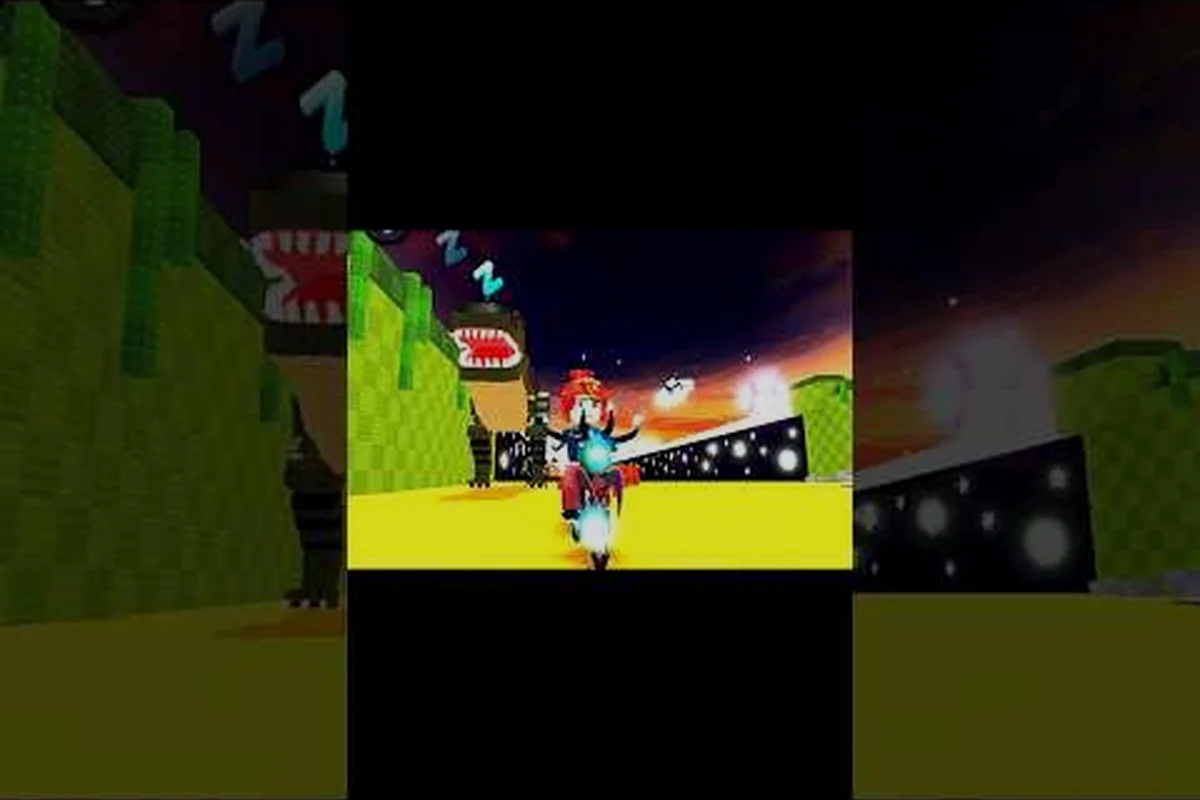
Your first session in Bike For Egg! lives or dies on one skill: grabbing an egg and getting away clean. This beginner guide covers the exact how-to-play order, the first egg steal, and the ride-off escape that turns a nervous new player into a pet collector.
The loop is simple on paper, but the timing is not. Steal an egg, hand it to a hatching station, earn money from the pet that pops out, then reinvest into speed so the next steal is easier. Miss the ride-off and you lose the egg, the money, and the momentum. Get it right and your first ten minutes set up everything that follows.
For the most accurate and up-to-date details on the game's mechanics, you can refer to the official Bike For Egg page on Roblox.
How the Bike For Egg! Gameplay Loop Actually Works
The official Bike For Egg! Roblox game page lays out the full progression chain, and it is worth reading once before you spawn in: steal eggs from pets, hand them back to hatch companions, earn money from pets, upgrade the treadmill and base, train on the treadmill to gain Speed, steal eggs from other players, discover rarer eggs, pets, sizes and mutations, and finish the Animal Index to claim rewards. That is the whole game in one sentence, and every beginner decision should serve it.
What the page does not tell you is the order that actually works. Most new players sprint straight at the nearest egg, get caught, and quit. The better opening is slower for about ninety seconds and then snowballs: hatch one companion, bank its payout until the first treadmill upgrade, and only then test a steal on open ground. Skipping the pet step means no income, no Speed, and a base that never scales.
Here is the priority order that keeps a fresh account moving: treat the first ninety seconds as an investment phase, not a race. Hatch your starter companion from the nearest egg, let its passive payout tick up your cash, and resist the urge to spend that balance on cosmetics or extra egg slots — every early coin should funnel into the first treadmill upgrade, because Speed is the stat that decides whether your later steals succeed or end in a respawn. Only once you can outrun a defender on open ground should you test a player steal, and when you do, carry the egg straight back to your base rather than hatching it in the open where a faster player can intercept it. Skipping the pet-and-treadmill steps means no income, no Speed, and a base that never scales past the tutorial zone.
-
Hatch your first companion before you attempt any player steal, because a pet is your only income source early on.
-
Bank money from that pet until you can afford your first treadmill upgrade, since Speed is the stat that decides every chase.
-
Train on the treadmill in short bursts rather than one long grind, because the early levels are cheap and the later ones are not.
-
Attempt your first player steal only after you can outrun a defender on open ground.
-
Return stolen eggs to your base instead of hatching them in the open, where anyone can intercept.
That sequence matters because Bike For Egg! gameplay punishes greed more than it punishes caution. A player who hatches two pets and upgrades once will out-earn a player who attempts five steals and loses four of them. The math is blunt: every failed steal costs you the egg plus the respawn walk back, while a hatched companion keeps paying out on its own timer the entire time you are recovering. Two pets ticking income through the first treadmill upgrade will clear more cash per minute than a reckless streak of contested eggs, because the Animal Index only rewards eggs you actually bank — a dropped or intercepted egg counts for nothing. Treat the early loop as compound interest, not a sprint: hatch, bank, upgrade, train, then steal.
Why Speed Comes Before Everything Else
Speed is the currency of every chase in the game. When you steal an egg, the defender will chase you, and the only question that matters is whether your bike is faster than theirs. According to community reports, most early losses come from players who spent their first earnings on cosmetics or extra egg slots instead of treadmill time.
The treadmill training guide breaks down exactly how much Speed each upgrade tier returns, which is useful once you are past your first hour. For now, the rule is simple: if you have money and you are not saving for a specific pet, put it into Speed.
| Opening Priority | What It Costs | What It Unlocks |
|---|---|---|
| Hatch first pet | One stolen or starter egg | Passive money income |
| First treadmill upgrade | Early pet earnings | Faster chases and escapes |
| Base upgrade | Accumulated pet money | Safer egg storage |
| First player steal | Confidence plus Speed | Rarer eggs and mutations |
| Animal Index tracking | Nothing but attention | Long-term reward claims |
Your First Egg Steal: A Step-by-Step Walkthrough
The first steal is the moment Bike For Egg! clicks or does not. Do it against a low-traffic target, not the busiest base on the server. New players tend to pick the flashiest base because it looks like it has the best eggs, then discover it also has the most defenders.
Follow this order and your first attempt has a real chance of succeeding: the sequence below is built around how the egg-carrying penalty actually works, so each step buys you time you would otherwise lose to the slower movement speed that kicks in the moment you pick up an egg. Skipping the scout or the circle is what turns a clean steal into a chase across the map, and on a low-traffic base the owner is far more likely to be idle than actively guarding, which is exactly the window this route is designed to exploit.
-
Scout from a distance and watch which bases have eggs sitting unattended near the edge.
-
Circle once to check whether the owner is actively moving around or idle.
-
Approach from the side rather than the front entrance, since most players watch the main path.
-
Grab the egg and immediately turn toward open ground instead of toward your own base.
-
Break line of sight before heading home, so the defender loses track of your route.
Step four is the one beginners skip. Turning straight toward your base tells the defender exactly where you live, and a determined player will follow you there. Turning away first costs you a few seconds and saves you a base raid.
Reading a Base Before You Commit
A base with eggs scattered near the fence is a base whose owner is not paying attention. A base with eggs clustered behind a wall or near a hatching station is a base whose owner is mid-loop and will notice a missing egg fast.
Spend thirty seconds watching before every steal. Look for three things: whether the owner is moving, whether eggs sit close to the boundary, and whether anyone else is already circling the same base. Two thieves on one base usually means one of them gets caught.
The Ride-Off Escape: Turning a Steal Into a Clean Getaway
The ride-off is the part of Bike For Egg! that separates players who keep their eggs from players who keep losing them. It is not a single button press; it is a short sequence of decisions made in about five seconds.
The core idea is that you never ride in a straight line home. Straight lines are predictable, and predictable players get caught. Instead, use terrain, corners, and other players' bases as cover while you bleed the chase out. Every sharp turn around a base corner forces the defender to re-aim their bike and re-read your heading, and that half-second of hesitation is where your Speed stat does the work — a stolen egg slows you down, so the longer the chase drags, the more ground you lose. Treat the map's tight corridors as your escape lanes: a chaser committed to a straight sprint cannot match a turn you take at full Speed, and each corner you clear adds distance they must rebuild from a near-stop.
| Escape Situation | Best Move | Why It Works |
|---|---|---|
| Defender directly behind you | Sharp turn around a base corner | Breaks the chase camera and buys distance |
| Defender ahead of you | Cut toward open ground | Avoids a pincer from a second player |
| Multiple chasers | Ride through a crowded area | Chaos splits their attention |
| Low on Speed | Head for your base immediately | Your base is the only safe zone |
| Egg already secured | Do not re-engage | Every extra second risks the egg |
When to Abandon the Egg
Sometimes the right play is to drop the egg and run. If two defenders converge and your Speed is clearly lower, holding the egg guarantees you lose both the egg and the respawn time. Dropping it costs you nothing but the attempt, and you keep your position for a second try.
Experienced players treat eggs as replaceable and their own positioning as precious. That mindset is the single biggest difference between a beginner who stalls and one who climbs. The beginner mistakes breakdown covers several more of these judgment calls that cost new accounts hours.
Upgrading Your Base and Treadmill in the Right Order
Money in Bike For Egg! has three sinks: treadmill upgrades for Speed, base upgrades for storage and safety, and egg-related progression. Beginners spread money across all three and end up mediocre at everything, because each sink scales on its own curve — a treadmill level that feels cheap now doubles in cost two tiers later, and the same is true of base storage slots. The trap is spending on whichever upgrade screen you happen to open first, rather than committing to the sink that compounds. Speed is the one stat that pays you back on every future steal, so under-funding the treadmill early quietly caps your income for the rest of the run.
The efficient split for your first hour looks like this: treat your starting cash as a 50/25/25 budget rather than a pool to dip into whenever an upgrade screen pops up. Concretely, if you begin with 1,000 coins, that means roughly 500 into treadmill Speed tiers, 250 into base storage slots so a raid can't strip your hatched pets, and 250 parked for your first rare egg attempt. The reason the treadmill takes the lion's share is compounding: every Speed point applies to each steal for the rest of the run, so a tier bought in minute five has already paid for itself by minute thirty, while a storage slot only matters the moment a raid actually lands.
-
Roughly half your early earnings into treadmill upgrades, because Speed compounds across every future steal.
-
A quarter into base upgrades, enough to keep hatched pets and stored eggs safe.
-
The remainder held back for the first rare egg you actually want to chase.
Once your Speed is comfortable, the ratio flips. Base upgrades start paying for themselves because you can hold more eggs without losing them to raids, and rare eggs become worth the trip. Concretely, once your treadmill Speed lets you clear a steal run reliably, shift toward base storage slots and pet-safety tiers — a raid that strips a hatched rare pet costs you far more than the coins you'd have saved by skipping one Speed tier. The math is simple: a lost rare egg can set your progression back several runs, while an extra storage slot protects every egg you're holding at once. At this stage, prioritize base upgrades that guard your highest-value eggs first, then expand storage capacity for the rare eggs you're now fast enough to chase.
Understanding Mutations Early
Mutations are rolled when eggs hatch, and they change what a pet is worth. You do not need to chase them in your first session, but you should know they exist so you do not discard a lucky hatch. The mutations odds guide explains how the rolls work and which outcomes are actually rare.
A mutated pet from an ordinary egg can be worth more than a plain pet from a rare one, because mutation multipliers stack on top of the base pet's stats rather than replacing them. A common-tier hatch that rolls a strong mutation can therefore out-value a rare-tier hatch with no mutation at all, which is why experienced players hatch every egg they earn instead of hoarding them indefinitely — each hatch is a fresh mutation roll, and skipping hatches just forfeits those rolls. Keep an eye on the mutation tag on each hatch result before you sell or trade it away.
Building Toward the Animal Index
The Animal Index is the long-term goal that gives Bike For Egg! its shape. Every new pet you hatch gets logged, and finishing entries unlocks reward claims. New players who ignore it end up re-hatching duplicates they already own without realizing it counts for nothing new.
Start tracking from your very first hatch. The Animal Index completion guide lists what each entry requires and where the rewards land, which saves a lot of wasted eggs later. Each logged pet fills a slot, and duplicate hatches of an already-owned entry count for nothing new — so check the Index before spending eggs on a reroll. Logging every hatch from hour one means your first two to three pets already count toward reward claims, and you avoid re-hatching a common pet you could have skipped.
| First-Hour Goal | Realistic Target | What It Sets Up |
|---|---|---|
| Pets hatched | Two to three | Steady income and Index entries |
| Treadmill upgrades | One or two tiers | Winning chases instead of losing them |
| Successful steals | One clean steal | Confidence plus a rarer egg |
| Index entries logged | Every hatch so far | Progress toward reward claims |
| Base upgrades | One | Safe storage for future eggs |
Frequently Asked Questions
What should I do first in Bike For Egg!?
Hatch a companion pet before attempting any player steal, because pets are your only early income source. Bank that money into a treadmill upgrade so your Speed can win chases, then attempt your first steal once you can outrun a defender on open ground.
How do I keep an egg after stealing it?
Turn away from your own base immediately after grabbing the egg, break line of sight around a corner, and only then head home. Riding in a straight line toward your base tells the defender exactly where you live and invites a follow-up raid.
Do I need to spend money on mutations early?
No. Mutations roll automatically when eggs hatch, so your job early on is simply to hatch often and not discard a lucky result. Chase specific mutation outcomes only after your Speed and base are stable enough to support repeat attempts.
How long does it take to finish the Animal Index?
It depends on how many rare eggs you can reach, and community reports suggest casual players take weeks rather than days. Logging every hatch from your first session prevents duplicate work and keeps progress visible as your Speed and base improve.
Is Bike For Egg! playable solo?
Yes, and the solo route is viable because the treadmill and base upgrades do not require other players. Solo play simply means you pick quieter bases to steal from and accept slower rare-egg access in exchange for fewer contested chases.
The opening hour of Bike For Egg! rewards patience over aggression. Hatch a pet, convert its earnings into Speed, scout before you steal, and treat the ride-off as a skill rather than a formality. Do that and the rest of the progression chain, from mutations to the Animal Index, opens up on its own schedule.