
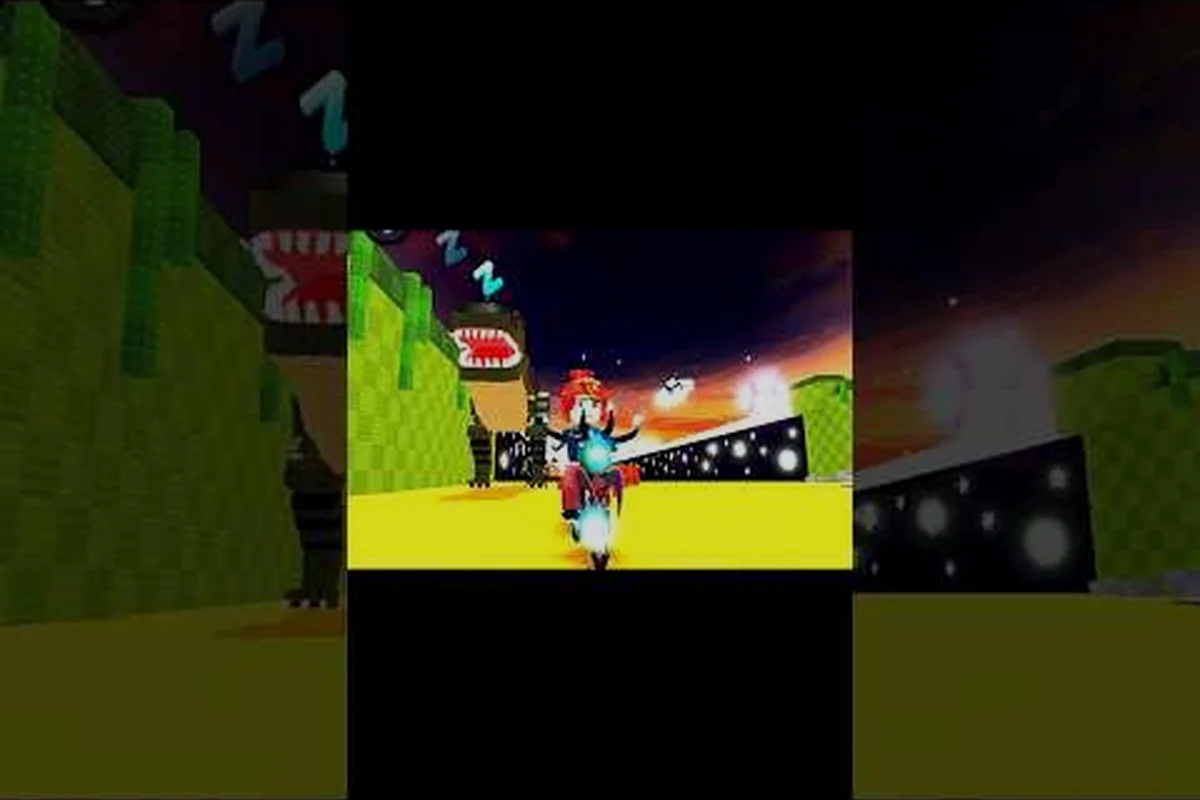
The Bike For Egg end game guide matters because the loop you learn in your first hour stops paying somewhere around your third bike upgrade, and most players never rebuild their routine after that. Late-game progress comes from stacked daily tasks, an auto collect setup that runs while you do other things, and a short list of pet targets that are actually worth the eggs you burn chasing them.
What Changes Once You Reach the End Game
The early loop is simple: steal an egg, hand it to a hatch companion, watch the money tick up, buy a faster bike. That loop still exists in the late game, but the returns flatten hard. According to the official Bike For Egg! game page, the core cycle stays the same across the whole run — steal eggs, hatch companions, earn money from pets, upgrade the treadmill and base, train Speed, and complete the Animal Index for rewards. What changes is which part of that cycle you should be spending your minutes on.
In the end game, three things dominate your session value: the Speed stat's diminishing treadmill returns, pet income scaling through duplicates rather than raw pet count, and one-time Animal Index payouts sitting unclaimed in unfinished entries. These three levers interact — a high-Speed account burns fewer minutes per training run, freeing time for egg-stealing loops that feed duplicate pets into the income engine, while every completed Index entry converts a sunk hatching cost into a guaranteed cash injection. Miss any one of them and your hourly earnings stall even as playtime climbs, which is exactly why the endgame rewards a fixed daily checklist over reactive play.
-
Speed stat returns — treadmill training gives diminishing gains once your Speed is high, so each session needs to be shorter and more targeted.
-
Pet income scaling — money per pet matters more than total pet count, which means duplicates become currency rather than clutter.
-
Collection completion — the Animal Index rewards are one-time payouts, so unfinished entries are pure left-on-the-table value.
The practical shift is that you stop playing reactively. Instead of logging in and seeing what happens, you run a checklist: claim your daily Animal Index payout by hatching the missing egg first, spend a fixed treadmill session on Speed only until the per-run gain drops below the cost of the upgrade, then push the remaining minutes into egg-stealing loops so duplicate pets keep feeding the income engine. That checklist is what the rest of this guide builds.
Reading Your Own Progress Honestly
Before you change anything, take an inventory. Count your bikes, your pet slots, your treadmill level, and your Animal Index completion percentage. Players who feel stuck usually discover one of those four numbers has not moved in days, and that stalled number is the actual bottleneck. Fixing it is usually cheaper than grinding more eggs.
Building a Daily Task Routine That Compounds
Bike For Egg daily tasks are where endgame content actually lives, because the game rewards repetition more than it rewards long single sessions. A focused 25-minute routine beats a scattered two-hour session almost every time, and the reason is simple: your money and Speed gains scale off upgrades, and upgrades need predictable income.
Here is a routine structure that works at most progression levels, and the exact ordering inside it is what separates a productive session from a wasted one. Adjust the sequence based on what your account needs most, but keep the claim-first and spend-last anchors intact: claiming pending rewards before anything else protects free value if your session gets cut short, while holding your Base upgrade purchase until the end forces you to spend only the money your egg steal route actually produced. Mid-game accounts chasing Speed should also front-load the treadmill block before hatching, since higher Speed shortens every future steal run and compounds the eggs you bank per session.
| Order | Task | Time | Why It Comes Here |
|---|---|---|---|
| 1 | Check and claim any pending rewards | 2 min | Free value, zero risk, do it first |
| 2 | Run your egg steal route | 8 min | Funds everything else in the session |
| 3 | Hatch and sort new pets | 5 min | Turns eggs into income before you log off |
| 4 | Treadmill training block | 5 min | Speed gains help every future steal |
| 5 | Base upgrade purchase | 3 min | Spend before you leave, not after |
| 6 | Animal Index check | 2 min | Flags which eggs to target tomorrow |
The order matters more than the exact minutes. Claiming first means you never lose a reward to a session that ends early. Stealing second means your hatching has fresh material. Upgrading last means you spend money you actually earned rather than money you hoped to earn.
Why the Treadmill Block Should Stay Short
Treadmill training is the most commonly over-invested activity in the late game. The Speed stat does keep climbing, but the cost per point rises, and there is a ceiling to how much raw Speed changes your egg-stealing outcomes. Community reports consistently describe the treadmill as a support system rather than a main activity — you train enough to keep your movement competitive, then you go back to stealing.
If you are unsure whether your treadmill level is behind or ahead, compare it against your bike tier. A maxed bike with a neglected treadmill is a common late-game profile, and it is usually the cheaper fix. The reason is that Speed only needs to clear the movement threshold for reliable egg theft — once your bike tier already covers the distance and escape window, extra treadmill ranks buy almost nothing. Check your Speed against the current egg zone's requirement first; if it clears, redirect those coins and time into bike upgrades or auto collect unlocks instead.
Sequencing Around Your Real Play Window
Most players get one solid block per day, not three. If that is you, compress the routine: claim rewards, steal for ten minutes, hatch, then do a single treadmill block and one upgrade. Skip the Animal Index check and do it weekly instead. The routine is a framework, not a contract, and a version you actually run beats an ideal version you abandon.
Setting Up Auto Collect Without Wasting It
Bike For Egg auto collect is the single biggest quality-of-life unlock in the late game, because it converts idle time into progress. The catch is that auto collect only pays well if your underlying income is already decent — it multiplies what you have rather than creating value from nothing.
Think of it in three tiers: at the low end, a thin roster with a handful of pets and weak base income turns auto collect into a trickle, so your first move is hatching more pets rather than idling; in the middle, a solid pet roster with mid-range income makes auto collect genuinely useful, and the priority shifts to expanding pet slots so the multiplier has a bigger base to work on; at the top, a full roster paired with high income makes auto collect excellent, and the only remaining job is keeping it running constantly through your Bike For Egg daily tasks so no idle window goes to waste.
| Your Setup | Auto Collect Value | What to Fix First |
|---|---|---|
| Few pets, low income | Minimal | Hatch more pets before relying on it |
| Solid pet roster, mid income | Good | Expand pet slots to raise the ceiling |
| Full roster, high income | Excellent | Keep it running constantly |
The mistake players make is turning on auto collect with a thin roster, seeing small numbers, and concluding the feature is weak. It is not weak — it is a multiplier, and multipliers need something to multiply. Concretely, if your handful of pets is only generating a modest trickle of eggs per minute, auto collect simply scales that trickle by its multiplier and hands you a slightly larger trickle — the idle window still feels wasted. The fix is sequencing, not abandoning the feature: hatch enough pets to lift your base egg-per-minute above the low tier in the table above, confirm the multiplier is now producing a visible jump, and only then lean on auto collect during your Bike For Egg daily tasks. Treat auto collect as a reward for roster depth, never a shortcut around it.
What to Do While Auto Collect Runs
Auto collect frees your hands, not your attention. The best use of that window is the activities that do not generate money directly but unlock future money: sorting duplicates, planning your next egg target, and checking which Animal Index entries are still open. Players who treat auto collect as permission to walk away entirely get far less out of it than players who treat it as a background process.
If you are still deciding which pets deserve your permanent slots, the Animal Index completion payoff breakdown explains which collection rewards justify the effort and which ones are cosmetic bragging rights. That split matters at end game because slot space is scarce: a pet that only feeds a cosmetic page competes with a pet that raises your actual income floor every hour.
Choosing Endgame Pet Targets Worth the Eggs
Bike For Egg endgame content is mostly a pet problem. Your income, your Speed support, and your collection completion all route through which pets you own, and the late game is where the difference between a good roster and a great one shows up in real numbers.
Three categories deserve your attention, and the split matters because each one pays back differently relative to its egg cost. High-income pets are the engine of your endgame economy: they fund the upgrade tiers that make auto collect worth leaving on overnight, so a single strong earner can outperform a whole bench of mid-tier pets. Collection-only entries are the opposite trade — near-zero practical value in daily tasks, but they close Animal Index milestones that unlock permanent bonuses. Mutation variants sit in between, since a size or color roll shifts trade value far more than raw performance, making them a negotiation tool rather than a battle pick.
-
High income per slot — these pay for your upgrades and make auto collect meaningful.
-
Collection-only entries — low practical value, but they close Animal Index milestones.
-
Mutation variants — the same pet with a size or color roll, which changes trade value more than raw performance.
The Duplicate Problem
By the late game, most players are sitting on a pile of pets they will never use. Duplicates are not junk — they are trade material and, in some cases, upgrade fuel. The habit that separates fast late-game progress from stalled progress is a weekly purge: sort your inventory, keep one of each useful pet, and convert the rest.
The beginner mistakes that stall new players are worth revisiting even at high level, because several of them — hoarding duplicates, ignoring slot limits, buying bikes before pets — keep costing players money long after they stop being beginners. Rechecking that list monthly is cheap insurance against slow leaks that do not show up in a single session but compound across a week of play.
Matching Pets to What You Actually Do
A pet that boosts income is wasted if you spend your session on the treadmill, and a Speed pet is wasted if you are mostly idling on auto collect. Be honest about how you actually play, then build the roster around that. This is the single highest-leverage decision in the end game, and it costs nothing to make.
Spending Priorities When Everything Costs a Lot
Late-game purchases are expensive enough that a wrong buy sets you back days, because egg income scales with your pet roster rather than your bike's top speed. A single high-tier bike upgrade can consume the same currency you would have spent unlocking two or three pet slots, and those slots keep paying out through every daily task and auto collect cycle long after the bike is maxed. The priority order below reflects what actually moves your progress — pet slots first to raise the income ceiling, bike tier only when speed is literally gating which eggs you can reach, then treadmill levels and base upgrades — based on the upgrade structure described on the official game page and consistent player reporting.
| Priority | Purchase | Reason |
|---|---|---|
| 1 | Pet slots | Raises your income ceiling permanently |
| 2 | Bike tier (if behind) | Speed gates which eggs you can reach |
| 3 | Treadmill levels | Support stat, diminishing but real |
| 4 | Base upgrades | Slow compounding value |
| 5 | Cosmetic or side purchases | Only after the four above are handled |
The temptation is to buy the flashiest bike the moment you can afford it. Resist that until your pet slots are comfortable, because a fast bike with a thin roster just means you steal eggs faster and hatch them into a smaller income base.
When to Stop Upgrading Speed
There is a practical ceiling. Once your Speed is high enough to reliably complete your steal route without being caught, additional treadmill investment returns very little per coin. Redirect that money into pet slots and let auto collect do the compounding work instead.
Tracking Progress Without Burning Out
The end game in Bike For Egg is long by design, and the players who finish it are the ones who build a routine they can sustain rather than a grind they resent. Two habits carry most of the weight: a short daily checklist and a weekly review.
The daily checklist is the routine above. The weekly review is where you answer three questions — did my income go up, did my Speed go up, did my collection percentage go up. If two of the three moved, you had a good week. If none moved, something in your routine is broken and needs replacing rather than repeating.
The claim rewards guide is useful here because unclaimed rewards are the most common invisible leak in a late-game account. Players grind for a milestone, forget to collect it, and then wonder why their numbers look flat. Adding a ten-second claim sweep to your end-of-session routine closes that leak permanently and costs almost no time.
Keeping the Session Enjoyable
A routine that makes you quit is worse than no routine. If the daily checklist starts feeling like a chore, cut it in half for a week. Auto collect keeps your income moving while you take a lighter session, and the collection progress does not expire. Sustainable pacing beats heroic bursts every time in a game with this much late-game runway.
Frequently Asked Questions
What should I focus on first in the Bike For Egg end game?
Pet slots come first because they permanently raise your income ceiling, which makes every other activity more profitable. After that, bring your bike tier up to match the eggs you want to reach, then invest in treadmill levels. Cosmetic and side purchases should wait until those three are handled.
How much does Bike For Egg auto collect actually earn?
It depends entirely on your existing pet roster, since auto collect multiplies your current income rather than generating a fixed amount. Players with a full roster and high-income pets report strong passive returns, while thin rosters see very little. Build your pet base before relying on it.
Are Bike For Egg daily tasks really necessary?
They are the most efficient path, though not strictly required. A structured daily routine of claiming rewards, stealing eggs, hatching, training, and upgrading consistently outperforms long unstructured sessions because upgrades compound. Skipping days is fine as long as you return to the routine.
Which pets are worth chasing in Bike For Egg endgame content?
Prioritize high income per slot first, since those fund everything else. Then fill collection-only entries to close Animal Index milestones for one-time payouts. Mutation variants matter mainly for trade value. Match the roster to how you actually play rather than chasing the rarest name.
How do I know if my endgame progress has stalled?
Track three numbers weekly: income, Speed, and collection percentage. If none of them moved over a full week, one part of your routine is broken. The usual culprits are unclaimed rewards, a neglected pet roster, or treadmill spending that has passed its useful ceiling.
The end game in Bike For Egg rewards structure over intensity. Build a daily task routine you can actually run, get auto collect working on top of a real pet roster, and spend your coins in the order that raises your ceiling rather than your top speed. Do those three things and the long grind stops feeling like a grind.