
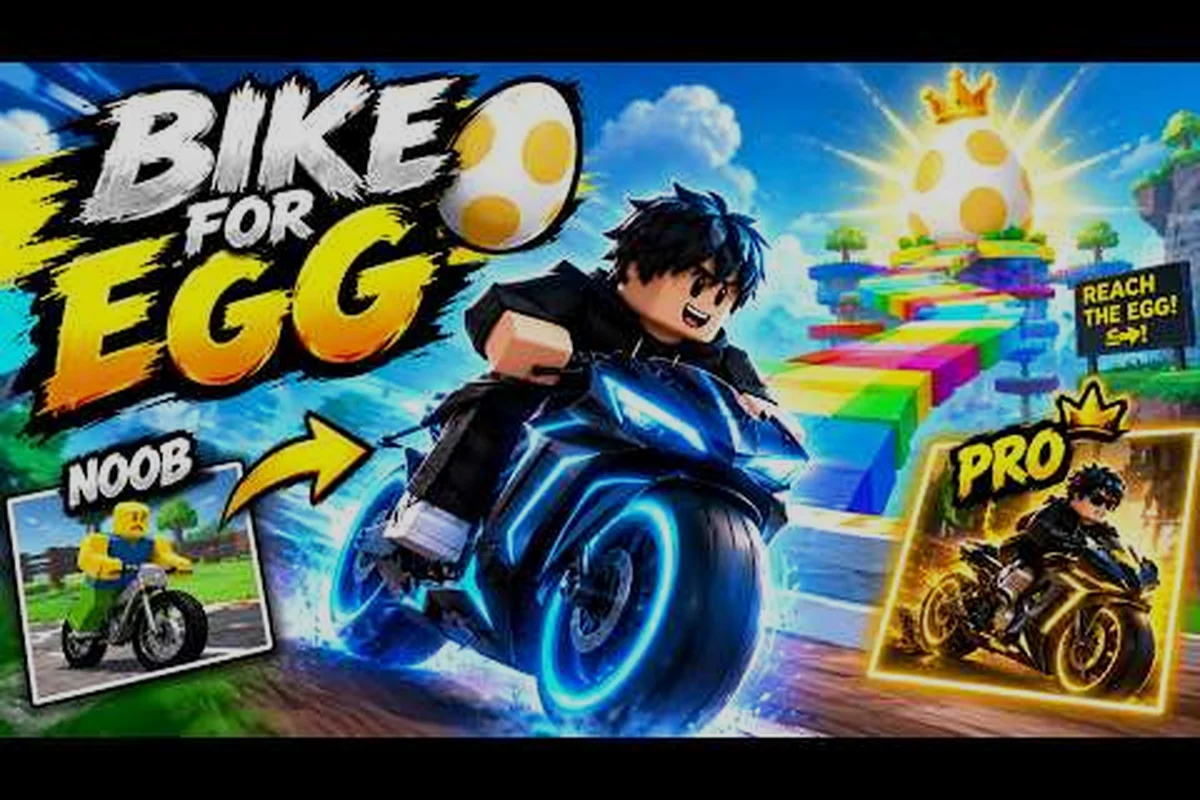
Most Bike For Egg tips and tricks lists tell you what to buy, but the thing that actually decides your first hour is whether you can scoop an egg while still rolling. This Bike For Egg new player guide breaks down the catch-frame window, the controls that make it repeatable, and the habits that turn a shaky start into steady progression.
The catch-frame is the split second where your bike overlaps an egg and the pickup registers. Miss it and you loop back for another pass; hit it and you keep your speed, your route, and your coin flow intact. Everything below builds toward making that window feel automatic.
What the Catch-Frame Window Actually Is
The catch-frame is not a button press — it is a positional overlap. Your bike model has to pass through the egg's pickup radius while you are in motion, and the game registers the grab on the frame where the two hitboxes intersect. Community footage of the movement skill, such as this Bike for egg roblox bikeforegg reference clip, shows the same pattern: riders sweep across the blocky map and scoop eggs without ever stopping.
That detail matters because new players instinctively brake before grabbing. Stopping kills your momentum, resets your approach angle, and leaves you parked next to a respawn timer instead of already riding toward the next egg. The whole skill is learning to trust the overlap and keep the throttle open.
Three variables control whether the grab lands: your approach angle into the egg's pickup radius, your speed at contact, and your bike hitbox width. Miss any one and the frame whiffs — a dead-on head-on line forces you to brake and stall inside the radius, while a shallow diagonal clip lets the hitbox sweep through it at cruise speed. Speed is the tightest margin: too slow and you drift out before the frame registers, too fast and you overshoot the overlap entirely. Hitbox width compounds both — a wider upgraded bike covers more of the radius per pass, so the same line that grazes one egg on a starter ride scoops two or three.
-
Approach angle — hitting an egg dead-on is slower than clipping it at a shallow diagonal.
-
Speed at contact — too slow and you drift past the radius; too fast and you overshoot the frame.
-
Bike hitbox width — wider rides cover more of the radius per pass, which is why upgrades change your steal rate.
| Variable | Weak Approach | Strong Approach |
|---|---|---|
| Angle | Head-on, full stop | Shallow diagonal clip |
| Speed | Braking into contact | Steady cruise, no brake |
| Hitbox | Starter bike, narrow | Upgraded bike, wider |
| Recovery | Reverse and retry | Continue forward loop |
| Result | One egg per 20 seconds | Two to three eggs per pass |
The practical takeaway is simple: treat eggs as gates you ride through, not objects you park beside. That means committing to the shallow diagonal clip on every pass and trusting the catch-frame to register the overlap mid-motion, rather than tapping the brake to "line up" a grab. Once that mental shift clicks, your egg count per minute roughly doubles before you spend a single coin — the same starter bike that nets one egg per 20 seconds when you stop-and-reverse starts pulling two to three per forward loop, simply because you never trade momentum for a parked retry.
Bike For Egg Controls You Need Mapped First
Before you chase speed, get comfortable with the inputs. The Bike For Egg controls are deliberately simple, but the timing between them is what separates a clean steal from a clumsy one. Spend five minutes in an empty stretch of map practicing acceleration, steering, and dismount before you ride into contested territory.
Acceleration and Steering Feel
Hold forward to build speed, and use short steering taps rather than long holds. Long holds overcorrect and send you wide of the egg radius, which is the single most common cause of missed grabs in the first hour. Tap, adjust, tap again — the bike responds faster to small inputs than to sweeping corrections.
Camera and Look Direction
Your camera leads your bike. If you swing the camera toward the next egg before you turn, the bike follows a smoother arc and you arrive at the radius already aligned. Players who fight the camera end up zig-zagging, which bleeds speed and makes the catch-frame harder to hit.
Dismount Timing
Dismounting is not a steal tool — it is a reset tool. Use it when you are genuinely stuck against geometry, not when you miss an egg. Every dismount costs you the speed you built, and rebuilding that speed takes longer than a single loop back around the route. The riding bikes controls and speed basics breakdown covers the input layer in more depth if you want the full mechanical picture.
| Input | Common Mistake | Better Habit |
|---|---|---|
| Forward | Tapping to feather speed | Hold steady through the grab |
| Steering | Long holds that overshoot | Short taps, camera-led |
| Camera | Dragging behind the turn | Lead the turn by half a second |
| Dismount | Used after every miss | Reserved for geometry snags |
| Jump | Spammed near eggs | Used only to clear obstacles |
Your First Hour: A Progression Guide That Compounds
The Bike For Egg first hour sets the pace for everything after it, because early coins buy the upgrades that make later farming faster. Waste the first hour looping randomly and you will spend the second hour grinding to catch up. Structure it instead.
Here is the order that keeps momentum: it front-loads map knowledge while eggs are still low-value, so the mid-hour upgrade window lands on a route you already understand. Skipping straight to coin-farming in minutes 0-10 feels productive but leaves you buying a speed boost with no baseline to measure it against, which is why the 40-55 minute test step exists — you need a pre-upgrade egg-per-minute number to compare against. Riders who follow the sequence typically enter hour two with a repeatable two-cluster loop and one verified upgrade instead of a scatter of half-learned routes.
-
Minutes 0-10 — learn the map layout and identify two egg clusters close to each other.
-
Minutes 10-25 — run a tight two-cluster loop without stopping, focusing purely on clean catch-frames.
-
Minutes 25-40 — bank coins and buy your first meaningful upgrade rather than cosmetics.
-
Minutes 40-55 — test whether the upgrade widened your hitbox or raised your speed, then adjust the loop.
-
Minutes 55-60 — note which cluster produced the most eggs and make it your default route.
The logic behind this order is that upgrades multiply whatever route you already run. Buying an upgrade before you have a route means you never learn which loop it improves. Buying after means every coin you spend has a measurable effect on the next ten minutes.
A Bike For Egg progression guide is only useful if it tells you when to stop optimizing and start repeating. By the end of hour one you should have one route you can run on autopilot, one upgrade that clearly helped, and a rough sense of how many eggs per minute you are pulling. If you are still wandering, the beginner mistakes that stall new players covers the specific habits that keep riders stuck in that wandering phase.
Reading Egg Density Before You Commit to a Route
Egg density is the number of pickup opportunities per unit of travel, and it matters more than raw egg count. A cluster with four eggs packed tightly beats a spread-out area with six eggs, because travel time between grabs is what actually eats your session.
Walk the map once and rank clusters by how many eggs you can touch in a single continuous pass. Then rank them again by how contested they are. The best route is the highest-density cluster that other players are not already camping.
| Cluster Type | Eggs Per Pass | Contest Level | Best For |
|---|---|---|---|
| Tight corner cluster | 3-4 | High | Confident riders |
| Long straight run | 2-3 | Low | Learning catch-frames |
| Elevated platform | 2 | Medium | Practicing angles |
| Wide open field | 4-5 spread | Low | Speed testing |
| Chokepoint tunnel | 3 | Very high | Risk-tolerant players |
New players should start on the long straight run. It gives you repeated, low-pressure attempts at the same catch-frame geometry, which is exactly what builds muscle memory. Once three consecutive passes land cleanly, move to the tight corner cluster and accept that you will miss a few while you learn the tighter angles.
Density also shifts after events. Seasonal patches add spawn points and rotate rewards, so a route that felt perfect last month may be thin now — the Halloween update guide tracks which event spawns are worth folding into your loop.
Everyday Routines That Keep You Climbing
The riders who climb fastest are not the ones with the best reflexes. They are the ones who removed friction from their own routine. Consider the difference in raw numbers: a rider who pauses three times per loop to check inventory loses roughly 15–20 seconds of egg respawn uptime, and across a 20-loop session that compounds into several missed cluster cycles. The fix is mechanical, not talent-based — bind your route, decide your upgrade target before you start riding, and let the loop run uninterrupted. These habits are boring individually and enormous in aggregate.
-
Never stop to check inventory mid-route. Finish the loop, then check.
-
Bank coins in chunks, not trickles. A single upgrade beats five small purchases.
-
Keep one backup route. When your main cluster gets camped, you lose seconds instead of minutes.
-
Practice one new angle per session. Trying to fix everything at once fixes nothing.
-
Watch your own replays or recordings. Missed frames are obvious on rewatch.
The inventory habit deserves special attention because it is the most common silent time sink. Every pause to check what you have is a pause where eggs respawn without you. Set a rule: no menu opens until the loop completes.
Backup routes matter more than most guides admit. Egg clusters are contested by design, and a camped cluster turns a good rider into a stationary one. Having a second-best route memorized means the transition costs you a turn, not a session. If you want to layer passive income on top of active riding, the AFK farming loop setup explains how to keep coins ticking while you are away from the controls.
Speed, Hitbox, and When Upgrades Pay Off
Upgrades affect the catch-frame in two distinct ways, and confusing them leads to bad purchases. Speed upgrades get you to the next egg faster. Hitbox upgrades make each pass more likely to connect. Early on, hitbox is usually the better buy because a wider grab radius forgives imperfect angles while you are still learning.
| Upgrade Type | Effect on Catch-Frame | Best Timing |
|---|---|---|
| Speed tier | Faster travel between clusters | After route is stable |
| Hitbox width | Larger overlap per pass | Early, while learning |
| Acceleration | Quicker recovery from turns | Mid-game |
| Handling | Tighter steering arcs | Once angles feel natural |
A useful test: run five passes on your main route and count clean grabs. If you are landing three or fewer, your problem is hitbox or angle, not speed — buy width. If you are landing four or five but feel slow between clusters, speed is the correct spend. This single test prevents most wasted coins in the first few hours.
Speed also has a ceiling that matters. Past a certain point, extra velocity makes the catch-frame harder to hit because you cross the radius in fewer frames. The riders who look fastest in clips are usually the ones who found the speed where their grab rate peaks, not the ones with the highest top speed. Treat speed as a tool for reaching eggs, not a score to maximize.
Frequently Asked Questions
What is the catch-frame in Bike For Egg?
The catch-frame is the moment your bike's hitbox overlaps an egg's pickup radius while you are moving. The grab registers on that frame, so keeping momentum through the egg is what makes steals repeatable. Braking before contact usually causes a miss and forces a full loop back around.
Do I need to stop to pick up eggs?
No, and stopping is the most common beginner error. Eggs register while you are rolling, so a shallow diagonal pass at steady speed grabs more per minute than a parked grab. Reserve dismounting for when you are physically stuck against map geometry, not for missed eggs.
How long should my first session be?
Plan roughly one hour with a clear structure: ten minutes learning the map, fifteen running a two-cluster loop, fifteen banking coins for one upgrade, and the rest testing whether that upgrade improved your grab rate. Ending with a stable route matters more than ending with a big coin total.
Which upgrade should I buy first?
Buy hitbox width before speed if you are landing three or fewer clean grabs out of five passes. A wider grab radius forgives bad angles while you build muscle memory. Switch to speed purchases once your grab rate is stable and travel time becomes the bottleneck.
Why do I keep missing eggs at high speed?
High speed crosses the pickup radius in fewer frames, which shrinks your effective catch window. Drop to a cruise speed where you land four out of five passes, then raise it gradually. Peak top speed is less valuable than the velocity where your grab rate is highest.
The core of these Bike For Egg tips and tricks is that clean catch-frames beat everything else in the early game. Map your controls, pick a dense route, practice the diagonal pass until it is automatic, and spend your first coins on the upgrade that fixes your actual weakness rather than the one that looks exciting. Do that for one structured hour and the rest of your progression has a foundation to build on.