
The Bike For Egg rarest mutation sits at the top of a very short list, and knowing which rolls actually qualify changes how you spend every egg you hatch. Most players chase a Divine roll without understanding where it ranks against Secret and Eternal variants, so they burn hours on the wrong targets. This breakdown ranks the top-tier mutations, explains how the roll system decides your outcome, and shows the farming habits that quietly raise your odds of a jackpot.
Identifying the Rarest Mutation in the Game
The rarest mutation tier is defined by two things: how low the roll chance is and how few players have ever seen it drop. A Divine mutation is the headline jackpot most players name first, but the Eternal mutation and Secret mutation families sit in the same conversation because their spawn weights are similarly brutal. Community reports consistently place all three in the sub-1% band, which is why a single lucky hatch can define an entire account.
What separates them is not raw power alone but the combination of stat multipliers and visual flair. A Divine roll usually carries a strong multiplier plus a distinct aura, while Eternal variants lean toward long-term value and Secret rolls tend to be tied to specific egg pools. If you want the full tier ladder behind these names, the pet rarities breakdown maps Common through Mythic so you can see exactly how far above the baseline these jackpot rolls sit.
Here is the practical ranking most players converge on: Divine sits at the top for raw stat multiplier and aura visibility, Eternal follows closely because its trade value holds up long after the hype cycle fades, and Secret rounds out the podium since its pool-specific spawn makes it nearly impossible to farm on demand. In practice, a Divine roll on a high-tier pet can multiply its output several times over, which is why accounts holding one often skip entire farming tiers that standard rare rolls would otherwise require.
-
Divine mutation — the most sought-after roll, extremely low weight, strong multiplier and aura
-
Eternal mutation — comparable rarity, often valued for longevity and trade appeal
-
Secret mutation — pool-specific and unpredictable, frequently the hardest to target deliberately
-
Standard rare rolls — noticeably more common, useful as farming fuel rather than trophies
The key takeaway is that "rarest" is not one single mutation but a cluster of three families, and which one you should chase depends on your goal: Divine for raw stat multiplier and aura visibility, Eternal for trade value that outlasts the hype cycle, and Secret for pool-specific spawns that resist on-demand farming. Because all three sit in the sub-1% band, the smarter play is to target the egg pool whose Secret mutation you actually want rather than rerolling blindly, since a Divine hit on a high-tier pet can multiply its output several times over and let you skip farming tiers entirely.
Divine vs Secret vs Eternal: How the Top Tiers Compare
Understanding the differences between these three families matters more than memorizing a single number, because each one rewards a different farming approach. A Bike For Egg Divine mutation tends to be the roll players screenshot and share, while a Bike For Egg Eternal mutation is the one long-term collectors hold onto. The Bike For Egg Secret mutation is the wildcard that shows up in narrow egg pools and catches everyone off guard.
| Mutation Family | Relative Rarity | Typical Multiplier Feel | Best Chase Method | Trade Demand |
|---|---|---|---|---|
| Divine | Extremely rare | High | Bulk hatching during boosted windows | Very high |
| Eternal | Extremely rare | High, steady | Patient long-session farming | High |
| Secret | Extremely rare, pool-locked | Variable | Targeted egg selection | Situational |
| Rare (non-jackpot) | Uncommon | Moderate | Any routine hatch | Low |
The table above reflects community-reported patterns rather than a published drop table, so treat the multiplier column as directional. What stays consistent across player accounts is the ordering: Divine and Eternal occupy the top band, Secret sits alongside them but is harder to plan for, and everything below is farmable with normal play.
Why Secret Rolls Feel Different
Secret mutations behave differently because they are gated by the egg you choose, not just by a global dice roll. That means a player hatching the cheapest egg all day may never see one, while someone rotating through premium pools hits one by accident. The Secret Egg hatch odds guide explains how those pool-specific weights stack up, which is essential context before you commit a farming session to a single egg type.
Why Eternal Rolls Hold Value
Eternal variants are prized less for a flashy aura and more for staying relevant as your account grows. Players who pull one early often keep it equipped for dozens of hours, and that durability is exactly why trade offers stay high even months after a server's launch window.
How Mutation Rolls Actually Work
Every hatch runs through a roll sequence, and the rarest outcomes are simply the tail end of that distribution. A Bike For Egg mutation farming routine only improves your results if it increases the number of rolls you complete inside a given window — there is no trick that forces a Divine outcome. The mutations odds guide walks through the underlying roll logic in detail, and it is worth reading before you build a farming plan around guesswork.
The practical model looks like this: treat each hatch as one independent roll against a weighted tier table where Divine, Eternal, and Secret sit at the far tail, so your only controllable variable is roll volume per session. Concretely, if a standard egg costs roughly the same currency per attempt, then completing 100 hatches in one focused window gives you 100 separate chances at the Bike For Egg rarest mutation — whereas a scattered 20-hatch session gives you a fifth of that exposure, regardless of how "lucky" it felt. This is why Bike For Egg mutation farming plans should be built around currency-per-roll efficiency and hatch throughput, not around ritual timing or perceived hot streaks.
-
You hatch an egg, which consumes currency and time.
-
The game assigns a mutation tier based on weighted probabilities.
-
Higher tiers have dramatically smaller weights, so most hatches land in the common band.
-
Boosted events or special eggs temporarily shift those weights.
Because the system is probabilistic, streaks are normal. A player might hatch two hundred eggs with nothing above rare and then pull a Divine on the next attempt. That variance is the entire reason disciplined farming beats lucky one-off sessions.
| Roll Outcome | Rough Frequency Band | What It Means for You |
|---|---|---|
| Common | Majority of hatches | Expected result, keep going |
| Uncommon | Regular but not constant | Small win, useful fuel |
| Rare | Occasional | Worth keeping for trades |
| Divine / Eternal / Secret | Very rare tail | The actual jackpot |
The single most useful mental shift is to stop measuring a session by whether you got a jackpot and start measuring it by how many quality rolls you completed. That reframing keeps you farming through dry spells instead of quitting right before a lucky hatch.
Building a Mutation Farming Routine That Works
A Bike For Egg how to farm mutations question usually gets answered with "hatch more eggs," which is technically true but useless without structure. The players who pull jackpot rolls most often are the ones who treat farming as a repeatable loop with clear inputs and outputs. Your loop should maximize hatches per hour, minimize wasted currency, and concentrate effort during any boosted window the game offers.
Start by identifying your fastest reliable currency source, because egg cost is the real bottleneck. If your income stalls, your roll count stalls with it, and rarity odds never get a chance to pay out. The C tier pets farming alternatives article is useful here — it separates pets that actually accelerate income from filler ranks that look impressive but slow your loop down.
A workable routine looks like this: pick your fastest income method, bank roughly 100–150 eggs' worth of currency, then hatch that entire batch inside a single egg pool during a boosted window — for example, saving up before a Divine or Eternal rate-up rather than dribbling eggs one at a time. Logging each batch's size and results turns a dry streak into usable data, so you can tell whether a pool is genuinely cold or you simply haven't hit the roll count where Secret-tier odds start paying out.
-
Bank first, hatch second — accumulate enough currency for a batch of hatches rather than spending one egg at a time
-
Pick one egg pool per session — switching constantly dilutes your odds of hitting a pool-locked Secret roll
-
Farm during boosted windows — any event that shifts weights is worth scheduling around
-
Track your batch size — knowing you hatched 150 eggs makes a dry streak feel like data, not bad luck
-
Keep every rare roll — even non-jackpot rares have trade value that funds future batches
Timing Your Sessions Around Boosted Windows
If the game runs limited-time events that improve mutation odds, those windows are where your effort converts best. Players who save currency for these periods routinely report better outcomes than those who hatch continuously at a flat rate, simply because the same number of rolls is happening under friendlier weights. Watch for announcements and bank your currency in advance rather than spending it the moment it arrives.
Avoiding the Classic Farming Mistakes
The two most common errors are hatching the cheapest egg out of habit and abandoning a session after a short dry streak. Cheap eggs rarely carry the top-tier weights, so you are rolling a worse dice. Short sessions never reach the sample size where rare outcomes become likely, which means quitting early is the most reliable way to never see a jackpot.
Reading the Signals: When to Push and When to Stop
Rare-roll hunting is as much about session management as it is about raw hatches. A Bike For Egg rarest mutation attempt can consume an entire evening, so knowing when to keep going and when to bank your progress protects both your currency and your patience. The players who burn out are almost always the ones who never set a stopping rule.
| Session Signal | Recommended Action | Reason |
|---|---|---|
| Currency banked above batch target | Push a full hatch batch | More rolls in one window |
| Boosted event active | Extend the session | Weights are friendlier |
| Long dry streak, low currency | Stop and refarm | Rolling with no buffer wastes attempts |
| Jackpot pulled | Bank the win, keep farming | Protect the trophy, rebuild income |
| Multiple rare rolls in a row | Continue cautiously | Variance can swing either way |
The pattern is straightforward: push when your inputs are strong, stop when they are not. That discipline is what separates a productive farming account from one that spins its wheels. In practice, a single Bike For Egg mutation farming session should be capped at roughly 30–45 hatches, because the rarest mutation tiers — Divine, Secret, and Eternal — sit at the extreme tail of the roll table and the odds of a Bike For Egg rarest mutation do not improve with fatigue. Treat the currency banked above your batch target as your green light: if you can still absorb a full batch of hatches after a dry streak, keep rolling; if the buffer is gone, log off and refarm income instead of chasing a Bike For Egg Eternal mutation on empty pockets.
Protecting a Jackpot Once You Have It
If you do pull a Divine or Eternal roll, treat it as an asset rather than a display piece. Lock it, avoid risky trades, and let it fund your next farming cycle through its value. Players who immediately trade a jackpot for short-term currency often regret it once they understand how rare the roll actually was.
Community Findings and What They Mean for You
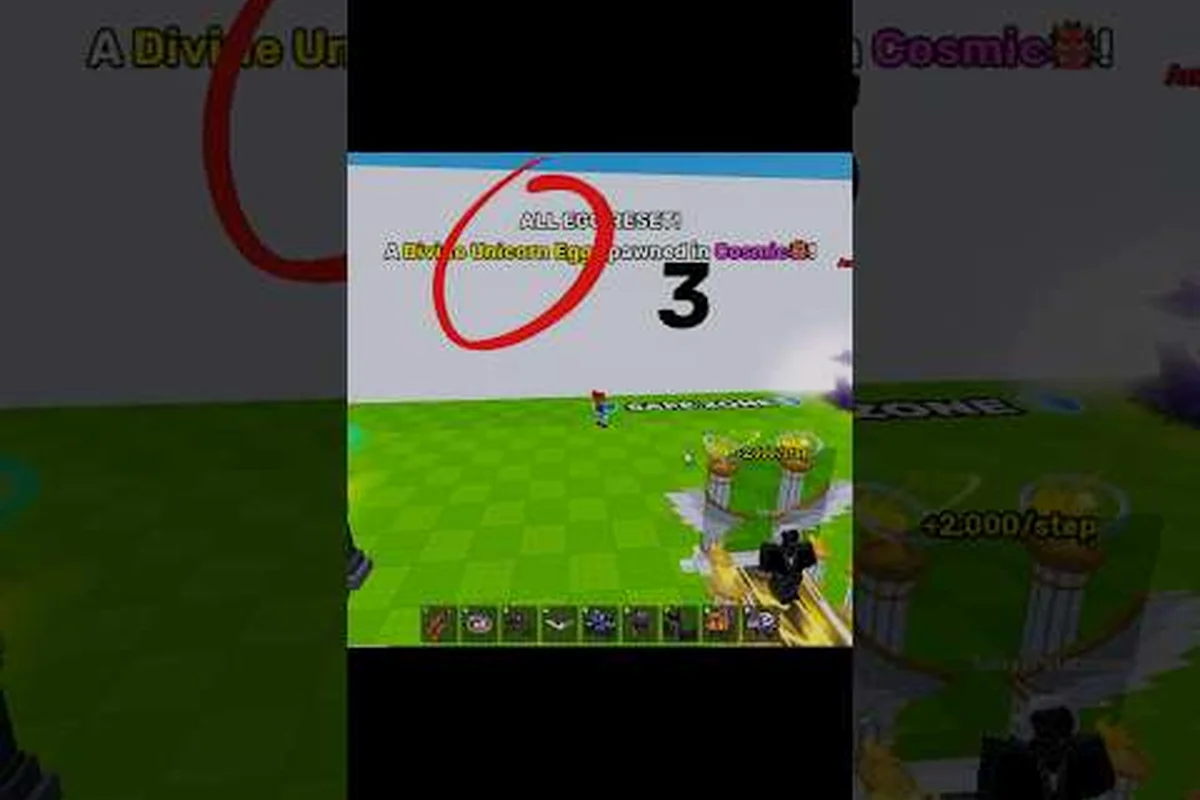
Community footage and player reports are the best available window into how rare these rolls really are, since no official drop table is published. One widely shared example, Ayerush Gaming's rarest Divine Unicorn egg run, documents how risky high-value egg chases can fail outright when guards and bosses interrupt the attempt — a useful reminder that the rarest outcomes carry real risk, not just low odds.
That footage reinforces a practical point: the players who succeed at the top end are the ones who plan around failure. They bank currency, they accept that most attempts miss, and they keep their farming loop running regardless of a single bad run. If you want to see how these jackpot rolls translate into account milestones, the Hatched Divine badge guide shows what the game itself tracks when you finally land one.
The honest summary of community data is that rarity here is real and unforgiving. No routine guarantees a Divine, Eternal, or Secret roll — but a disciplined routine is the only thing that meaningfully improves your chances over time. Farm in batches, chase boosted windows, protect your jackpots, and measure progress by rolls completed rather than trophies won.
Frequently Asked Questions
What is the rarest mutation in Bike For Egg?
The top band is shared by the Divine, Eternal, and Secret mutation families, all of which sit in a very low probability range according to community reports. Divine rolls are the most talked about, but Eternal and Secret variants are comparably rare and often harder to target deliberately because of egg pool restrictions.
Can I force a Divine mutation to drop?
No reliable method forces a specific jackpot roll, because the outcome is decided by weighted probability at hatch time. What you can control is roll volume: hatching more eggs per session, banking currency for batches, and concentrating effort during boosted windows all raise your exposure to the rare tail of the distribution.
How many eggs should I hatch before expecting a rare roll?
There is no guaranteed threshold, and anyone quoting a fixed number is guessing. Community experience suggests jackpot rolls can appear anywhere from a few dozen to several hundred hatches, so the practical approach is to set batch targets you can afford and treat each completed batch as progress regardless of outcome.
Is the Eternal mutation better than the Divine mutation?
They occupy the same rarity band, so "better" depends on your goal. Divine rolls are more visually distinctive and carry strong trade demand, while Eternal variants tend to hold long-term value as your account develops. Either one is a legitimate jackpot worth protecting once it drops.
Does mutation farming work on a low-currency account?
Yes, but slowly. Low currency means fewer rolls per session, which stretches the time before rare outcomes become statistically likely. Prioritize income first — a pet that accelerates currency generation will do more for your jackpot odds than hatching cheap eggs on a tight budget.